In order to keep filters up to date, please use this repo.

François Lp-Francois


quenhus
/ MOVED_TO_REPO.md
Last active
July 11, 2023 09:42

Lp-Francois
/ welcome-quote.sh
Last active
February 23, 2020 21:41
This file contains hidden or bidirectional Unicode text that may be interpreted or compiled differently than what appears below. To review, open the file in an editor that reveals hidden Unicode characters.
Learn more about bidirectional Unicode characters
| # Fancy welcome message | |
| emojis=("🎯" "🏹" "🚀") | |
| expressions=( | |
| "Arguing that you don't care about the right to privacy because you have nothing to hide is no different than saying you don't care about free speech because you have nothing to say." | |
| "Step by step." | |
| "Keep it simple." | |
| "It doesn't work? Come back to a working state." | |
| "Communication is the key.") | |
| RANDOM1=$$$(date +%s) | |
| RANDOM2=$$$(date +%s) |

max-rocket-internet
/ prom-k8s-request-limits.md
Last active
November 13, 2025 21:29
How to display Kubernetes request and limit in Grafana / Prometheus properly
A lot of people land when trying to find out how to calculate CPU usage metric correctly in prometheus, myself included! So I'll post what I eventually ended up using as I think it's still a little difficult trying to tie together all the snippets of info here and elsewhere.
This is specific to k8s and containers that have CPU limits set.
To show CPU usage as a percentage of the limit given to the container, this is the Prometheus query we used to create nice graphs in Grafana:
sum(rate(container_cpu_usage_seconds_total{name!~".*prometheus.*", image!="", container_name!="POD"}[5m])) by (pod_name, container_name) /

RomainLanz
/ .vimrc
Last active
November 11, 2019 18:15
This file contains hidden or bidirectional Unicode text that may be interpreted or compiled differently than what appears below. To review, open the file in an editor that reveals hidden Unicode characters.
Learn more about bidirectional Unicode characters
| set nocompatible " Use VIM settings instead of Vi. | |
| syntax enable " Enable syntax highlighting. | |
| so ~/.vim/plugins.vim " Load all plugins. | |
| "-------------Misc-------------" | |
| set backspace=indent,eol,start " Make backspace behave like every other editor. | |
| set tw=0 " Disable automatic linebreak. | |
| set noerrorbells visualbell t_vb= " No damn bells! | |
| set autowriteall " Automatically write the file when switching buffer. |

mohanpedala
/ bash_strict_mode.md
Last active
March 16, 2026 01:07
set -e, -u, -o, -x pipefail explanation

tinogomes
/ DNS_TO_LOCALHOST.markdown
Last active
January 31, 2026 20:55
Public DNS Pointing to localhost (127.0.0.1)
The best way to safely and securely use local domains pointing to 127.0.0.1 is to edit your local settings (/etc/hosts) and add your own settings. Keep in mind if you want to use subdomains, you need to enter all variations.
Example:
# Adding bottom of your current file /etc/hosts
################# MY LOCAL DOMAINS
127.0.0.1 local.com admin.local.com
127.0.0.1 domain1.com
Click to toggle contents of `code`
CODE!
Details

kevin-smets
/ iterm2-solarized.md
Last active
March 12, 2026 12:41
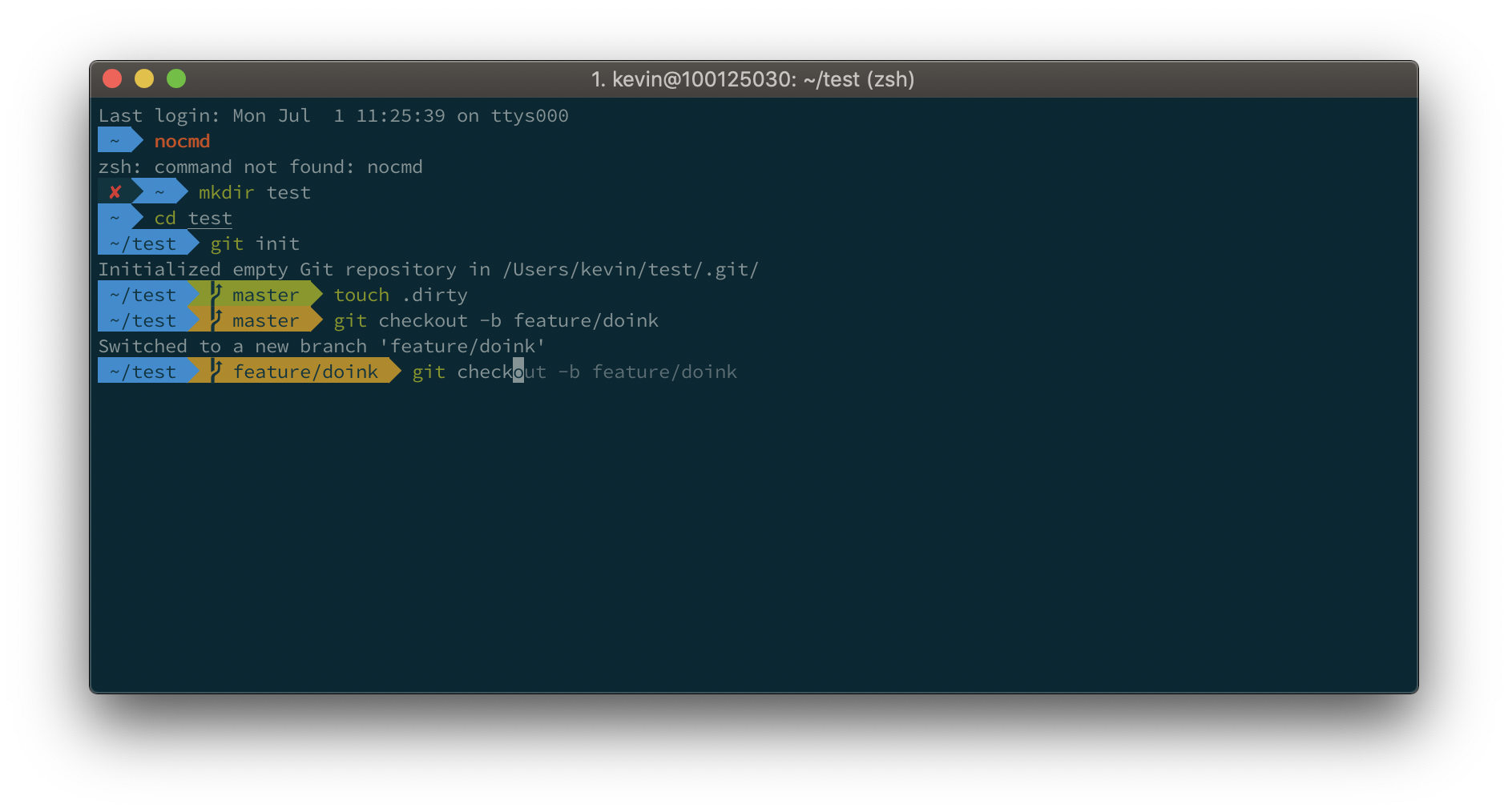
iTerm2 + Oh My Zsh + Solarized color scheme + Source Code Pro Powerline + Font Awesome + [Powerlevel10k] - (macOS)


Each of these commands will run an ad hoc http static server in your current (or specified) directory, available at http://localhost:8000. Use this power wisely.
$ python -m SimpleHTTPServer 8000