You signed in with another tab or window. Reload to refresh your session.You signed out in another tab or window. Reload to refresh your session.You switched accounts on another tab or window. Reload to refresh your session.Dismiss alert
List Git Files - List raw GitHub URLs for files in a repo or subfolder, filtered by extensions
This file contains hidden or bidirectional Unicode text that may be interpreted or compiled differently than what appears below. To review, open the file in an editor that reveals hidden Unicode characters.
Learn more about bidirectional Unicode characters
GL.iNet GoodCloud dynamic world map - Tampermonkey
This file contains hidden or bidirectional Unicode text that may be interpreted or compiled differently than what appears below. To review, open the file in an editor that reveals hidden Unicode characters.
Learn more about bidirectional Unicode characters
A basic test of OpenAI's Structured Output feature against financial disclosure reports and a newspaper's police blotter. Code examples use the Python SDK and pydantic for the schema definition.
Extracting financial disclosure reports and police blotter narratives using OpenAI's Structured Output
tl;dr this demo shows how to call OpenAI's gpt-4o-mini model, provide it with URL of a screenshot of a document, and extract data that follows a schema you define. The results are pretty solid even with little effort in defining the data — and no effort doing data prep. OpenAI's API could be a cost-efficient tool for large scale data gathering projects involving public documents.
OpenAI announced Structured Outputs for its API, a feature that allows users to specify the fields and schema of extracted data, and guarantees that the JSON output will follow that specification.
For example, given a Congressional financial disclosure report, with assets defined in a table like this:
This file contains hidden or bidirectional Unicode text that may be interpreted or compiled differently than what appears below. To review, open the file in an editor that reveals hidden Unicode characters.
Learn more about bidirectional Unicode characters
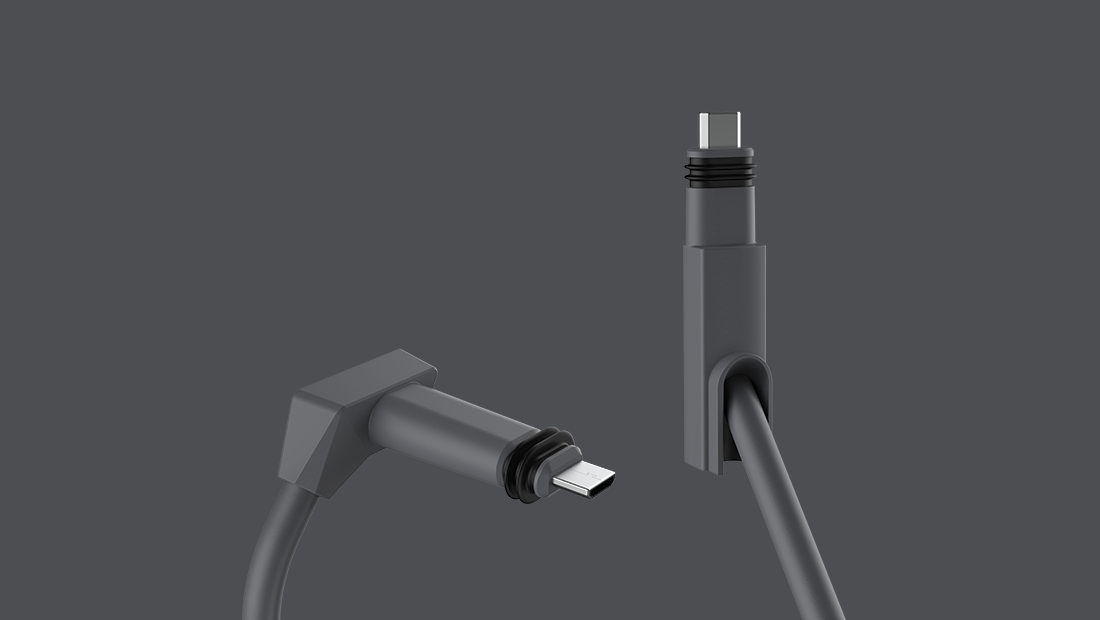
These are are some notes I put together on butchering the rectangular dishy
cable.
FOLLOW THESE GUIDELINES AT YOUR OWN RISK. I TAKE NO RESPONSIBILITY
FOR ANY DAMAGE OR INJURY YOU SUSTAIN FROM FOLLOWING OR NOT FOLLOWING
THESE GUIDELINES.
This file contains hidden or bidirectional Unicode text that may be interpreted or compiled differently than what appears below. To review, open the file in an editor that reveals hidden Unicode characters.
Learn more about bidirectional Unicode characters
This file contains hidden or bidirectional Unicode text that may be interpreted or compiled differently than what appears below. To review, open the file in an editor that reveals hidden Unicode characters.
Learn more about bidirectional Unicode characters
My thoughts on making the Web more composable like UNIX
The Composable Web Proposal
Serverless infrastructure like AWS Lambda and Google Cloud Functions have made it much cheaper for developers to offer server-side code for public consumption without keeping a server always running.
If these functions could be declared as stateless or deterministic, costs can be brought down even more because only the first invocation needs to be executed. Cached response could be returned for future invocations with the same input arguments.
All modern browsers support URL lengths of thousands of characters, even on mobile. A lot of data can be embedded and passed around directly in the URLs (instead of passing identifiers which requires a look-up which costs server time).
This gist details how to create or restore a disk image in Mac OSX. There are three methods that are described: Carbon Copy Cloner, Disk Utility, and CommandLine.