What is your greatest strength and how do you know?
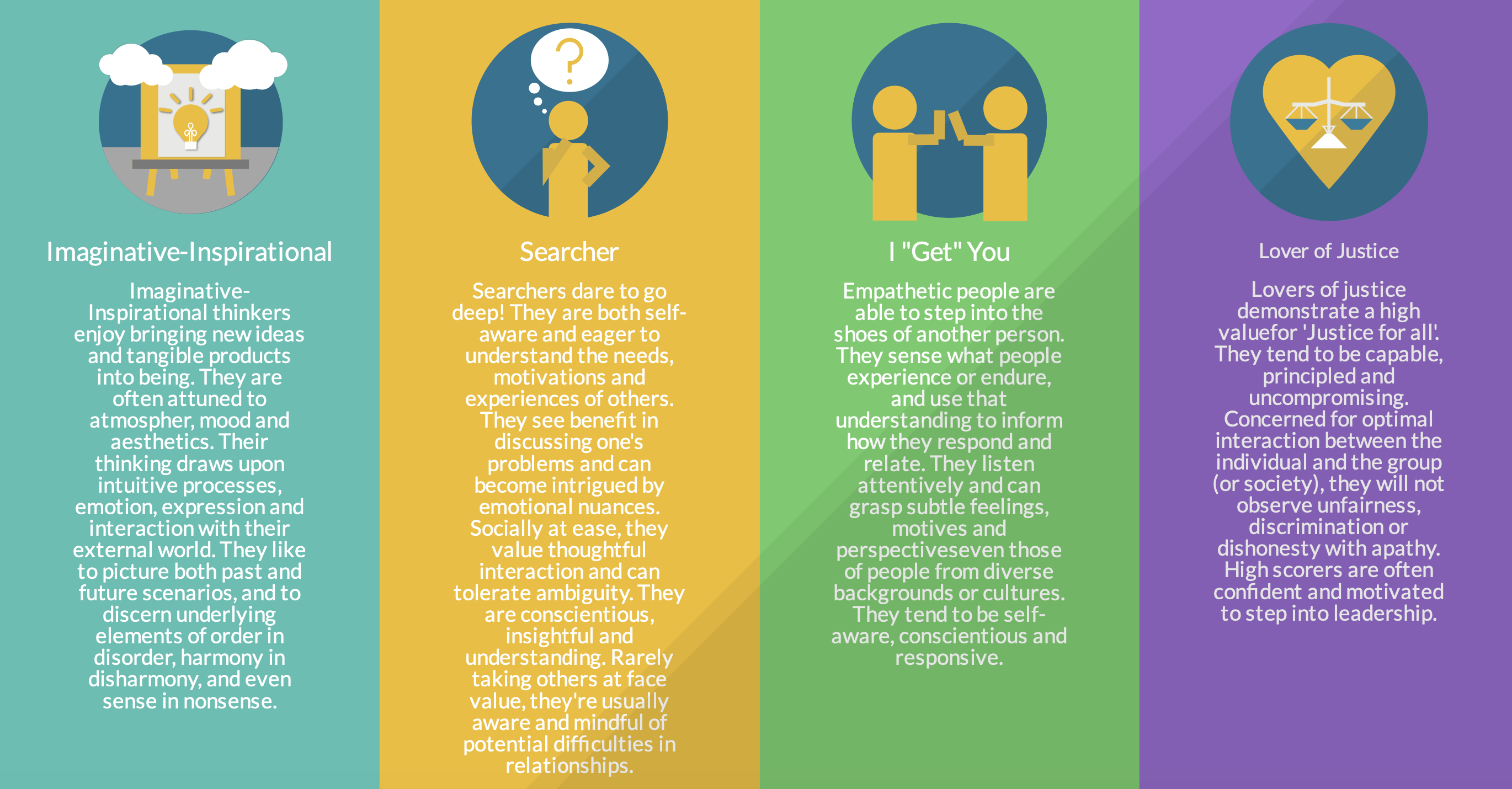
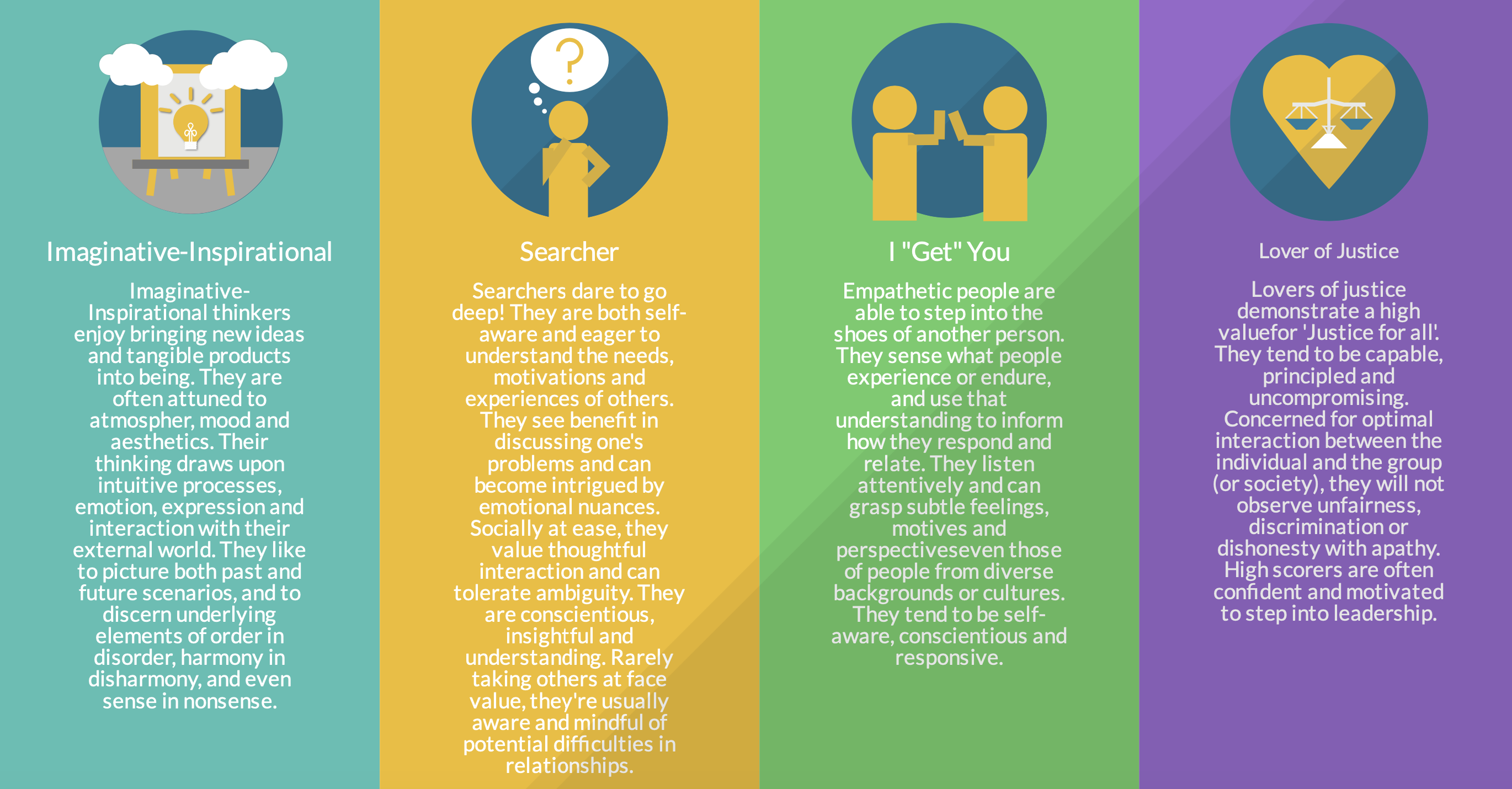
- According to the PAIRIN, my top thinking style is (Imaginative-Inspirational), my strongest driver is (Searcher), my top EQ competency is (I "get" you), and my highest virtue class is (Lover of Justice). My strengths include Civic, Entrepreneurial, Personal, and Professional, with Civic being my strongest category. I'm very attuned to emotional and social cues, work well in teams or independently, and have strong interpersonal skills. I believe these strengths come from my ability to listen to others, be patient, and my overall empathetic nature.
How do you work best?
- I can work well in teams or independently, adjusting my approach accordingly. I think there is value to working in teams, as you can gain so much perspective and ideas from diverse opinions. But, depending on the project, I sometimes prefer to work independently. If it's a project where I need to spend a lot of time reading and writing, I need time by myself to focus and digest the information. Then, I'm comfortable coming back and working with the group. I also prefer a quiet, focused work environment.
What is your greatest area of improvement?
- My greatest area of improvement is in the Personal category. I need to be more confident and in tune with my emotions. I need to work on improving my self-regard and balance. By knowing myself better, I can predict how I'm going to feel and how to better respond to situations.
How do you hope to maximize your strengths for your new career in software development?
- It's my understanding that in order to be a good software developer you need to understand the end user and the potential design problems that you're solving for. This is where my interpersonal skills and empathetic nature will come in handy. My ability to listen and understand what others need will help me solve problems and design creative solutions. Ultimately, I wish to use these strengths to focus on human centered design and create positive experiences.
How might knowing about your strengths and working preferences benefit you as a software developer?
- By understanding my strengths, I can better understand what aspects of being a software developer will come easier to me. But, on the flip side, I can also better understand what aspects might come to be a challenge for me. Because I have strong interpersonal skills, I know that I will be able to communicate my thoughts and ideas, as well as being able to ask others for input. Additionally, I think it's important to realize that other people have different strengths and weaknesses and the PAIRIN results will help to understand other people you're working with.
What efforts do you make to manage your learning process? Are these efforts successful? What challenges have inhibited your ability to manage your learning process effectively?
- When I want to learn something new, I usually like to figure out what I'm missing/what my skill gaps are and then fill in those gaps. I find myself to be more of a visual/hands on learner. So, I find that watching videos and tutorials helps me. I also learn better in a more quiet environment. But, sometimes, life can get in the way. Maybe you're too tired, maybe it's a lack of motivation, or maybe it's the fear of failure. Sometimes other things just take a higher priority.
How do Sierra's and Coate's material relate to your current process for learning?
- In my current learning process, I usually like to repeatedly do things until I feel that I have mastered it. I don't usually like to move on until I feel like I have mastered a skill. But, I need to get better about feeling okay with stumbling. Just as long as I'm stumbling in the right direction.
What role does your emotional state of mind play in your learning? How do your successes and failures at learning affect your emotional state?
- When I'm in a good emotional state of mind, I find that I am more focused and more motivated to learn. When something comes up in life that affects my emotions, I find that I can become distracted. So, I need to find a way to manage my emotional health. Of course when you find success, I am happier, more confident, and more motivated to continue learning. Failure can be difficult and can slow my learning. Ultimately, I need to savor the good moments and successes and find a way to make failure a mechanism to push me forward.
How will you prepare yourself to be at your best with your learning process while at Turing?
- I know that Turing is going to be challenging, but I'm excited to start this next chapter of my life. I'm excited to learn skills that are going to propel me into my new career of being a software developer. I'm going to make sure that I keep myself organized so that I don't get overwhelmed, celebrate my successes and to continue stumbling amongst the failure. Finding a good work/life balance will be essential to keep my mental/emotional health in check, which means leaning on my support system when I need it. This will also mean taking breaks while studying and also finding time to stretch and stay active.